
Mumbai, April 17 – The ongoing national debate over “Hindi imposition” has now taken root in Maharashtra, with strong political reactions erupting over the state government’s recent directive to make Hindi a compulsory third language in Marathi and English-medium primary schools.
The decision, backed by the BJP-led government, has drawn fierce opposition from the Maharashtra Navnirman Sena (MNS) and the Congress Party, both accusing the Centre and state of undermining regional linguistic identity.
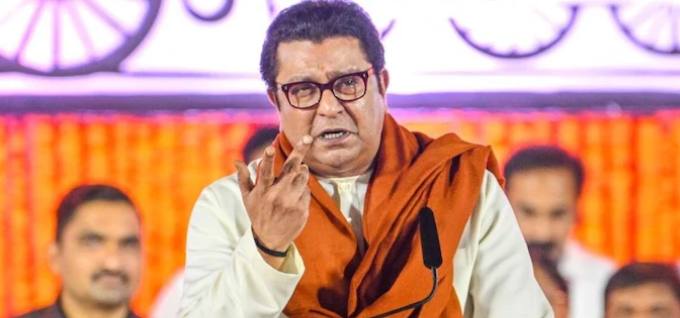
MNS chief Raj Thackeray, known for his “Marathi First” stance, strongly criticized the move on X (formerly Twitter), calling it a direct push by the Central government to “Hindi-ify” the nation. “We are Hindus, but not Hindi!” he declared, warning that any attempt to dilute Maharashtra’s Marathi heritage would provoke resistance.
“This is not just about language,” Thackeray wrote. “It appears to be a deliberate attempt to create tension between Marathi and non-Marathi communities ahead of elections. Maharashtra must take a stand just like the southern states.”
Congress Legislature Party leader Vijay Wadettiwar echoed these sentiments, calling for the immediate withdrawal of the notification. “Forcing Hindi in schools where Marathi and English are used is an attack on our linguistic identity,” he said.
Defending the decision, Chief Minister Devendra Fadnavis pointed to the Centre’s three-language formula under the National Education Policy (NEP), stating it was meant to foster national integration. “Marathi is our primary language, but Hindi, being the national language, should also be respected,” he said.
State BJP chief Chandrashekhar Bawankule reinforced the stance, saying the inclusion of Hindi does not diminish Marathi but adds value to students’ linguistic knowledge.
The controversy mirrors resistance from Tamil Nadu, where the ruling DMK continues to oppose the NEP’s push for a third language. CM MK Stalin and his son Udhayanidhi Stalin have warned that India’s cultural and linguistic diversity is under threat from what they call “cultural homogenization” through Hindi.
This renewed debate once again highlights the North-South linguistic divide and deep-rooted concerns over the preservation of regional languages and identities amid the Centre’s push for a unified language policy.



 Aaj Ki Janta
Leave a comment