
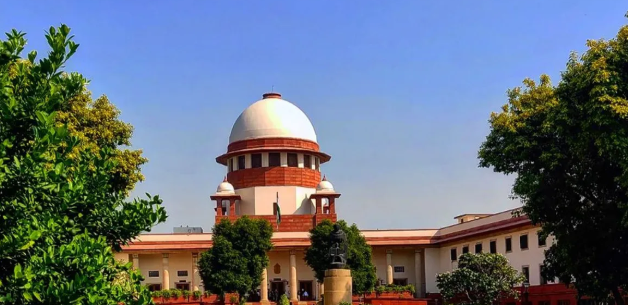
In an effort to streamline proceedings and avoid overcrowding in the courtroom, the Supreme Court on Thursday decided to hear only five selected petitions challenging the Waqf (Amendment) Act. The Bench, comprising Chief Justice of India Sanjiv Khanna and Justices PV Sanjay Kumar and KV Viswanathan, made it clear that the remaining 65 petitions will be treated as intervention or impleadment applications.
The Court asked the petitioners themselves to nominate five lead cases that will be taken up for hearing. The selected petitions, representing a diverse group of individuals and organizations, are:
- Arshad Madani v. Union of India – Filed by prominent Islamic scholar and principal of Darul Uloom Deoband, Arshad Madani.
- Muhammad Jameel Merchant v. Union of India – Brought forward by social activist Muhammad Jameel Merchant.
- Mohammed Fazlurrahim & Anr. v. Union of India & Ors. – Filed by Mohammed Fazlurrahim, General Secretary of the All India Muslim Personal Law Board.
- Sheikh Noorul Hassan v. Union of India & Ors. – Petition by Sheikh Noorul Hassan, a sitting MLA from the Manipur National People’s Party.
- Asaduddin Owaisi v. Union of India – Filed by Asaduddin Owaisi, President of the All India Majlis-e-Ittehadul Muslimeen (AIMIM) and Hyderabad MP.
The Court’s directive aims to ensure smooth and focused hearings on the matter without the chaos of managing over 70 petitions at once.
Advocate Ejaz Maqbool has been appointed as the nodal counsel for the petitioners, while Advocate Kanu Agrawal will represent the respondents, including the government. Advocate Vishnu Shankar Jain will serve as the nodal counsel for the applicants in the impleadment and intervention applications.
The Court’s approach reflects a broader judicial effort to manage high-profile constitutional matters with clarity and order.




 Aaj Ki Janta
Leave a comment