
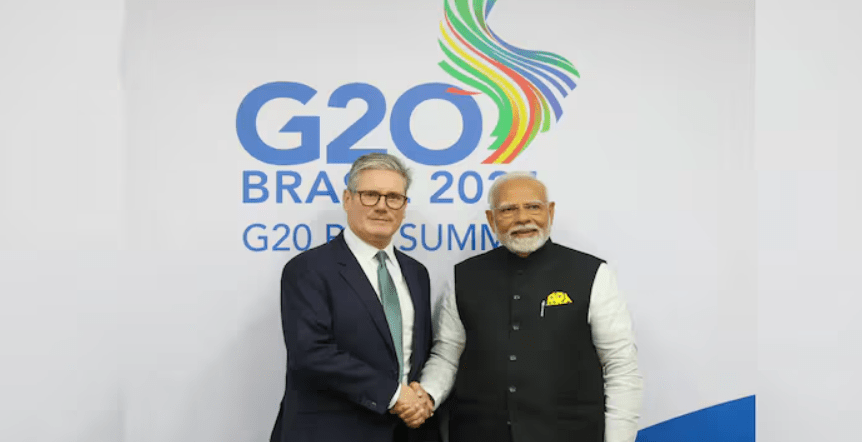
New Delhi, May 6: In a major diplomatic and economic breakthrough, India and the United Kingdom have finalized their long-pending Free Trade Agreement (FTA) and signed the Double Contribution Convention, marking what Prime Minister Narendra Modi called a “historic milestone” in Indo-UK relations. The announcement comes against the backdrop of heightened geopolitical tensions following the deadly terror attack in Pahalgam, Jammu and Kashmir.
Prime Minister Modi, who remains in the country amid the ongoing stand-off with Pakistan, held a crucial telephonic conversation with his British counterpart Sir Keir Starmer. During the call, PM Modi extended a formal invitation to PM Starmer to visit India, signaling a renewed era of strategic cooperation.
In a post on social media platform X, PM Modi stated that the agreement would “further deepen our comprehensive strategic partnership and catalyse trade, investment, growth, job creation, and innovation in both our economies.” The government emphasized that the FTA is “balanced, equitable and ambitious,” covering a broad spectrum including trade in goods and services.
According to an official joint statement, the deal is expected to significantly boost bilateral trade, open up fresh avenues for employment, raise living standards, and improve the overall well-being of citizens in both nations. Additionally, it sets the stage for collaborative innovation in developing products and services for global markets.
The road to this agreement has been long and complex. Negotiations began during the tenure of former UK Prime Minister Boris Johnson but faced repeated delays due to a range of sticking points. These included India’s demands for relaxed visa norms, particularly for professionals, and disputes over tariffs on UK exports like cars and Scotch whisky. Another critical issue was the UK’s proposed Carbon Border Adjustment Mechanism (CABM), which imposes levies on carbon-intensive imports like steel and fertilizers.
Sir Keir Starmer echoed the significance of the agreement, stating that “strengthening alliances and reducing trade barriers with economies around the world is part of our plan for change to deliver a stronger and more secure economy.”
With the deal now concluded, both nations appear poised to accelerate mutual growth and strengthen their geopolitical standing—at a time when global tensions make such alliances more crucial than ever.



 Aaj Ki Janta
Leave a comment