
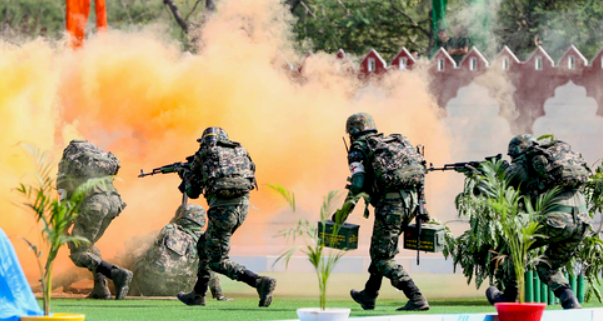
Bengaluru, May 6: In the wake of escalating tensions between India and Pakistan following the deadly April 22 terror attack in Pahalgam, Jammu and Kashmir, Karnataka is set to launch an intense week-long civil defence mock drill starting May 7. The attack, which claimed the lives of 26 individuals, has heightened national security concerns and prompted a swift response from defence and disaster management authorities.
The Union Ministry of Home Affairs, in coordination with the Karnataka state police and civil defence forces, has identified three strategic districts for the drills: Bengaluru Urban, Karwar in Uttara Kannada, and Raichur. The selected locations are home to critical infrastructure and are deemed high-risk zones in the event of a hostile attack.
Bengaluru’s high population density, combined with its concentration of Public Sector Undertakings like Hindustan Aeronautics Limited (HAL), key defence institutions such as the Defence Research and Development Organisation (DRDO), and IT hubs, made it a prime candidate. Meanwhile, Karwar houses vital defence installations including the INS Kadamba naval base and the Kaiga Atomic Power Station. Raichur’s importance stems from the KPCL Raichur Thermal Power Plant, a key contributor to the state’s energy supply.
According to Prashanth Kumar Thakur, Director General of Police and Commandant General of Home Guards and Civil Defence, the drills are designed to simulate hostile attack scenarios, including aerial threats. These exercises aim to enhance civilian preparedness, stress-test emergency response systems, and expose any vulnerabilities in the current infrastructure.
“To ensure effectiveness, drills will be conducted during both daylight and nighttime hours, beginning at 4 PM on May 7,” Thakur stated. “We have 35 air raid sirens installed across police and fire stations in Bengaluru, of which 32 are operational. These sirens, with a three-kilometre range, will alert civilians of simulated aerial threats.”
In addition to public warning systems, the drills will also involve hospital mobilisation, evacuation protocols, and relief and rescue operations. These efforts are expected to improve readiness in case of real-life emergencies.
Civilians have been advised to treat the sirens — which will sound for two to three minutes — as cues to immediately take cover in shelters or concrete structures.
As fears mount and drills commence, the central question remains: if conflict escalates, are we truly ready?




 Aaj Ki Janta
Leave a comment